Monstera Rust: Why It’s a Big Problem & What Comes Next
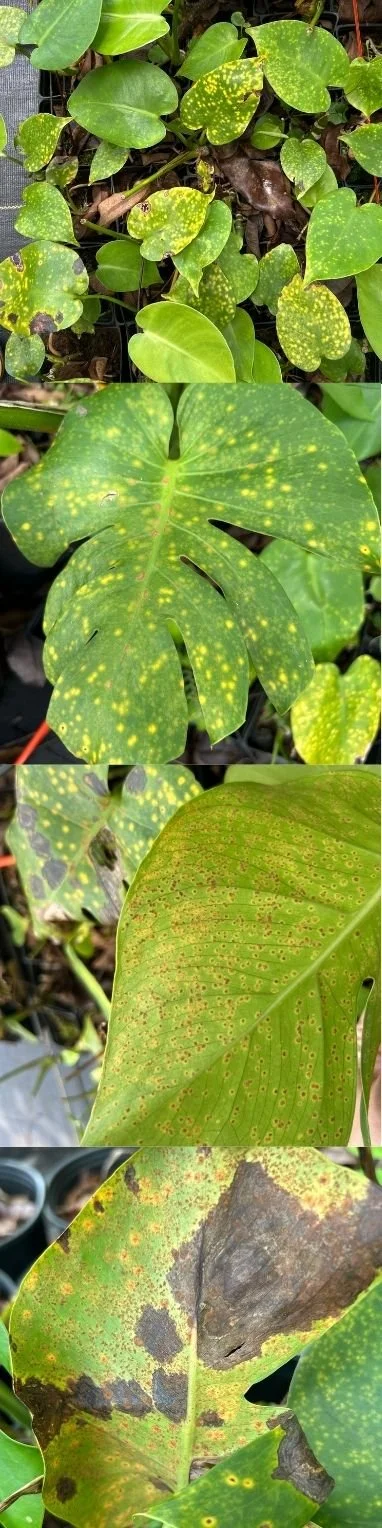
In the spring of 2025, we started to notice something peculiar about our Monstera plants. They began exhibiting yellow, powdery spots all over their leaves- A sign of a fungal issue. As fungal issues can spread rapidly, we quickly decided to cut back all of the infected leaves and relocate our Monstera out of the sales area and into a quarantine zone. Around the same time, we heard from other nurseries and landscapers on island that their Monstera were presenting similar symptoms.
We were contacted by a scientist from the Mycology Lab at the University of Hawaiʻi at Manoa, College of Tropical Agriculture and Human Resilience, who was interested in coming out to take a look at our Monstera crop. After evaluating the symptoms, they determined the cause as a new rust pathogen, Pseudocerradoa paullula. P. paullula has been reported in several states along the East Coast, including Florida. We suspect the rust was introduced to our nursery through Monstera plugs sourced from Florida. P. paullula was first confirmed to be present in Hawaii when UH came to Kauai to observe infected Monstera at local nurseries.
P. paullula is an obligate parasite that requires living plant tissue to survive. Our humid climate is favorable for this rust, and any extra shade, moisture, or poorly ventilated areas only help it spread. P. paullula symptoms include:
Brown lesions on leaves
Large or merged rust-colored patches
Yellowing and discoloration in the upper leaf surface
Small reddish-brown spots on the underside of leaves
Powdery or dusty spots on the underside
Necrotic leaves
Not only is this rust unattractive, but it causes the leaves to become necrotic and die back, and can even threaten the life of the plant. Rust spores travel and spread by wind, water, or direct leaf contact. Contaminated pruning tools and personal contact with infected leaves can transmit spores between plants. Overcrowded areas or poor ventilation also promote the disease. There are steps you can take to reduce the risk of an outbreak, such as removing the infected leaves, reducing excess moisture on the leaves, and applying fungicides.
As a nursery that prioritizes using organic products, we were discouraged by the prospect of using a systemic fungicide to treat our infected crop. We did our research on the effectiveness of treating with systemics, and what we learned is that although a fungicide can treat our infected plants, it won’t stop the rust from coming back. That means even if we treat our entire crop, customers could take a plant home, plant it in their yard, and if a neighbor also has infected Monstera plants, their plant is susceptible to reinfection. It doesn’t seem worth exposing our property to a systemic product, given that as soon as the plant leaves the property, it could get reinfected. Now comes the hard part…
We will no longer be growing and selling Monstera.
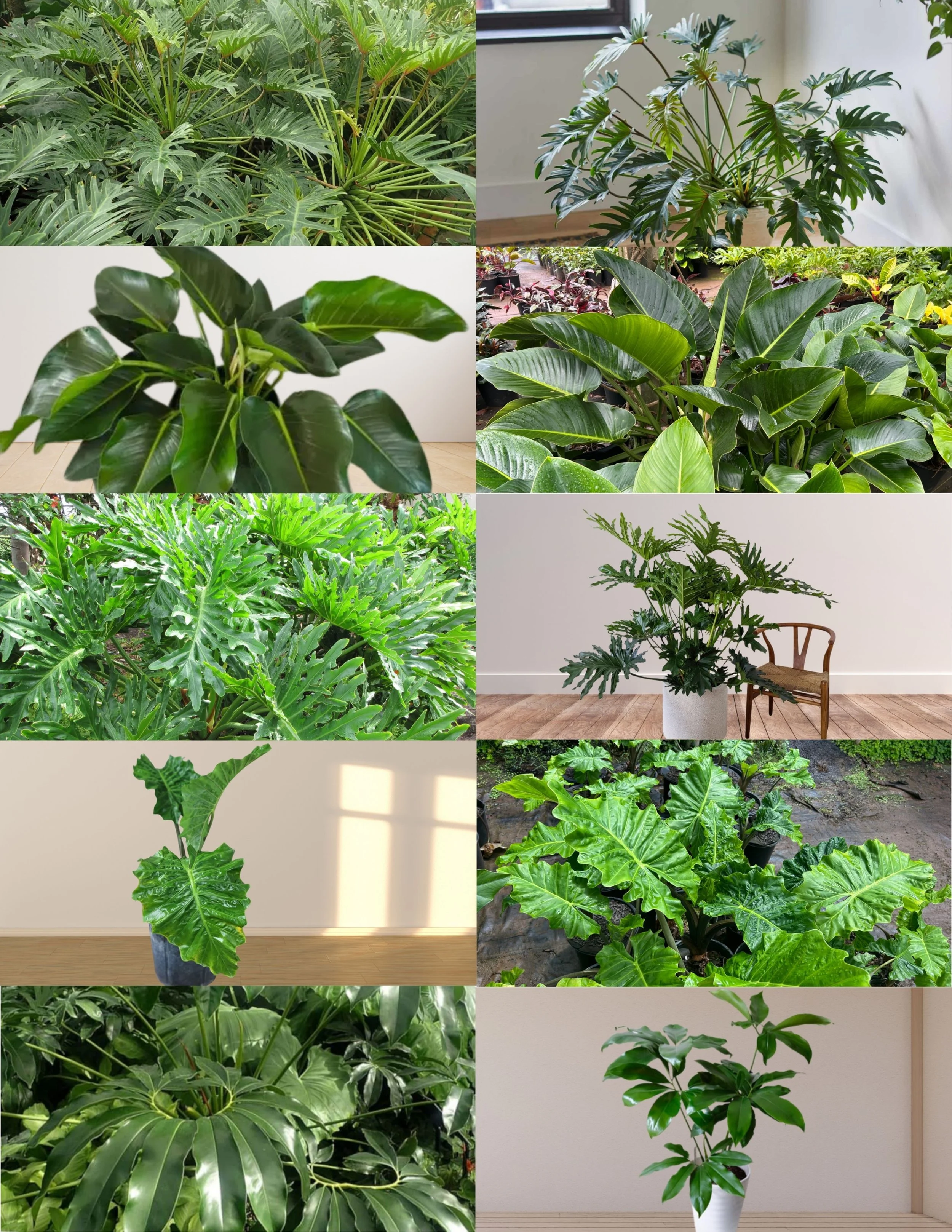
This decision has not been easy, but we aim to be as sustainable as possible when it comes to growing and caring for plants, and it just does not seem sustainable or responsible to continue growing a crop that will inevitably be exposed to a disease that will stunt or kill the plant. We’re sad to let Monstera go, as it is very popular among our customers and clients throughout the island. But we do have alternative options that are not susceptible to P. paullula.
Xanadu Philodendron
Whether you’re looking for a houseplant or a lush, leafy plant for the landscape, the Xanadu is funky and fun!
Congo Green Philodendron
These are the perfect green-leafed plant for your lush landscape! Plant in a pot or directly in the ground.
Selloum Philodendron
Also called the Split-Leaf Philodendron or Philodendron ‘Hope,’ the leaves take on a similar shape to the Monstera.
Low Rider Alocasia
This Alocasia stays short and compact, making it the perfect landscape plant for the area needing some lush fullness.
Finger Leaf Philodendron
This unique Philodendron takes on a spiral shape as it grows. The leaves are lush and interesting to look at!
To learn more about Monstera Rust, check out the Hawaii Department of Agriculture’s New Pest Advisory.