Protect Your Trees, Grow Below

Time after time, customers come in with the same tragic story we hear all too often: “I weed-wacked too close to my trees, and now they’re wounded and girdling!”

What does this mean?

Weed-wacker damage can cause girdling to the trunk when the lines cut into the bark, damaging the cambium layer. The cambium layer is where the living tissue transports water and nutrients between the roots and the leaves, and it is vital to the tree’s health. If the tree is wounded around the entire trunk, the tree’s vascular system is severely impaired, which can result in the tree's death over time. Even if the tree doesn’t succumb to the injuries from the wounds, open wounds invite pathogens and pests, and as the tree is in a weakened state, it becomes harder for it to fight off these issues. Minor girdles on healthy and established trees can often recover with proper care and protection, but complete girdles will likely require tree removal.

Mulching around the base of your tree is typically the recommended way to prevent this kind of damage. A thick mulch barrier helps keep weeds out and requires less weed-wacking closer to the trunk. The problem is that mulch disappears over time with rain, animals (thanks, chickens and pigs), or just breaks down after a while. A long-term solution not only protects your trees but can also help restore nutrients in the soil to help your trees grow healthier. The solution? Understory companion planting.

What is understory companion planting?

Understory companion planting is the concept of growing small, typically shade-tolerant plants beneath trees to create a layered and biodiverse landscape that is beneficial to the overstory trees. Groundcovers and low-growing plants can help to improve the structure of the soil, as well as help cycle nutrients and replenish depleted nutrients in the soil. And on top of that, these understory plants help keep the weeds OUT.

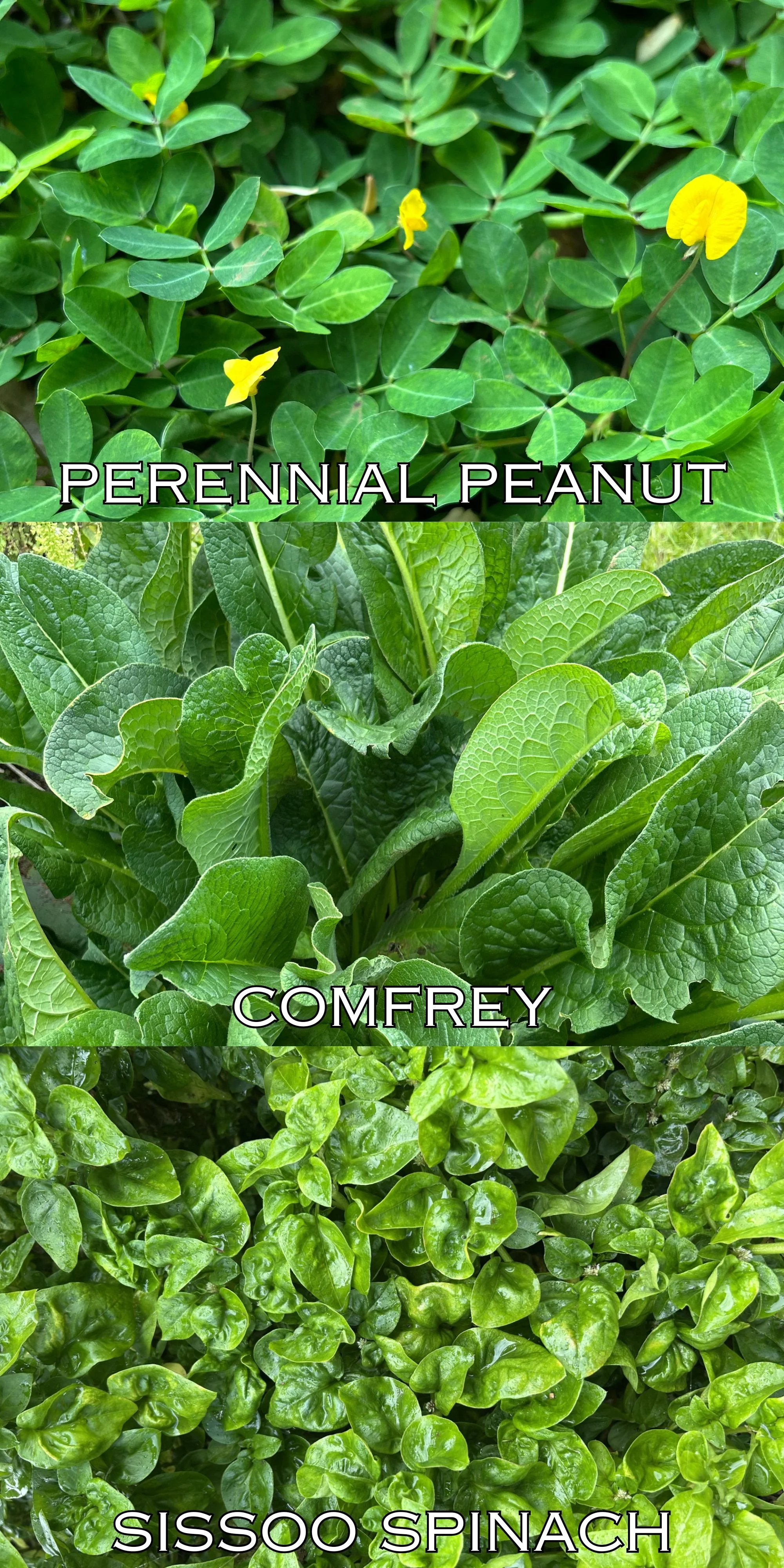
Although the term “understory” usually refers to the plants growing on the forest floor, you can treat each tree in your orchard as its own canopy with its own personal understory. There are a multitude of companion plants you can use as understory plants (see our past blog for specific companion planting crops), but there are a few options we gravitate towards here when planting fruit trees for clients. They are Perennial Peanut, Sissoo Spinach, and Comfrey. Let’s look at the benefits of each.

Perennial Peanut

Perennial Peanut is a great understory crop because not only does it help keep weeds out, but it is a natural nitrogen fixer! Perennial Peanut is a dense grower with flat foliage and small yellow flowers. The dense growth forms a thick mat that suppresses weeds with very little maintenance. Perennial Peanut has deep roots, which help prevent erosion. This is especially useful if you have a terraced orchard on a hillside and need a groundcover to help stabilize the soil! Perennial Peanut is a legume and spreads via rhizome. Legumes harvest atmospheric nitrogen to enrich the soil and reduce the need for synthetic fertilizers. Although the name leads you to believe the plant produces edible peanuts, sadly, that’s not the case. But the flowers are edible and have a peanut flavor. Perennial Peanut is an excellent choice for understory companion planting!

Comfrey

Comfrey is a great understory crop for your fruit trees because its large leaves smother grass and weeds, shade the soil, and help the soil retain water. Comfrey has a long taproot that reaches several feet below the topsoil layer, drawing minerals and micronutrients to the top where trees can better harvest these resources. When the Comfrey leaves die back, they break down, and the nutrients are released back into the soil as a passive fertilizer. And a bonus, Comfrey attracts pollinators and beneficial insects that can help deter pests from your fruit trees! Less weeds and less pests!

Sissoo Spinach

Sissoo Spinach is a great understory crop because it helps retain moisture. It can handle hotter climates better than other spinach varieties and has a crunchy texture with no slimy leaves. Eat raw in small quantities, or steam or boil to add to dishes as a spinach substitute. This plant is a vigorous grower and can get up to 12 inches tall. Sissoo Spinach prefers 50% or more shade to thrive.

Previous
Previous

Reef-Friendly Landscapes

Next
Next

Mother’s Day Garden Tour