
All About Aroids
Last month, our own plant wizard Margie introduced us to the wonderful world of Aroids! But what exactly is an Aroid? If you’ve been to the nursery, you’ve probably seen them everywhere! And odds are, you might even have one in your own yard. Stick with us if you want to learn all about Aroids!
What are Aroids?
Aroids are a plant family. A plant family is a taxonomic rank that groups together related genera sharing common physical, genetic, and evolutionary traits. Aroids are in the Araceae family, commonly known as the “arrowhead family.“ Araceae are monocotyledonous flowering plants that include more than 4,000 species! Most species are found in tropical regions, but Aroids can be found worldwide.
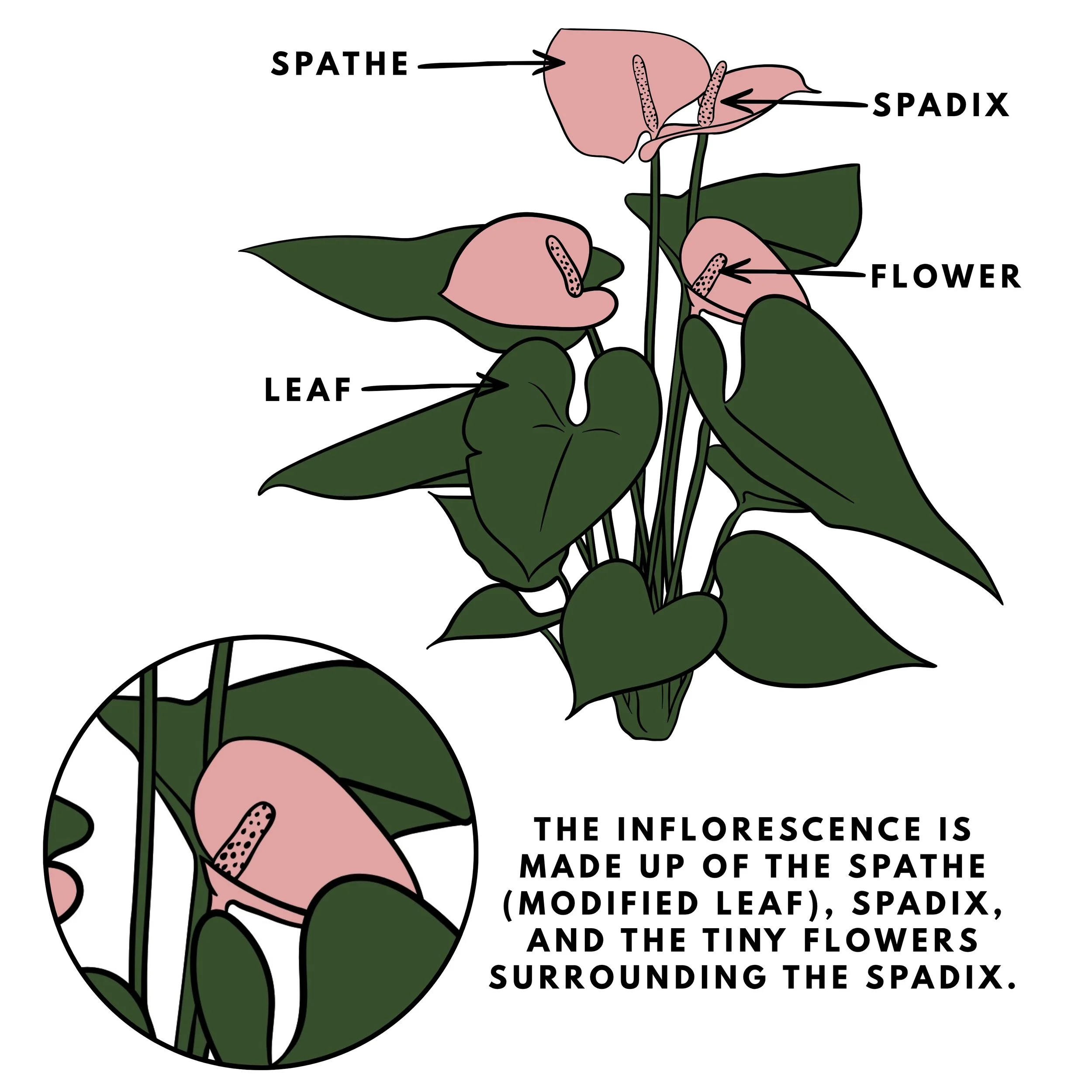
Aroids’ unique floral structure is what makes them distinguishable from other plant families. Aroids have countless tiny flowers around the spadix, a fleshy spike typically enclosed by a spathe, or modified leaf. This “flower” is actually called an inflorescence, and it is the hallmark of aroids.
The Aroid family includes a wide range of growth habits. Many Aroids grow from the forest floor, others climb trees or attach to rocks, while some are even aquatic! This plant family’s adaptability makes the Aroids a fascinating plant group for horticulturalists and plant lovers alike. But with so many different types of Aroids, how can you tell them apart?
Types of Aroids
While there are thousands of Aroid species, we’ll focus on the tropical Aroids you’ll most commonly find here at the nursery.
Philodendron
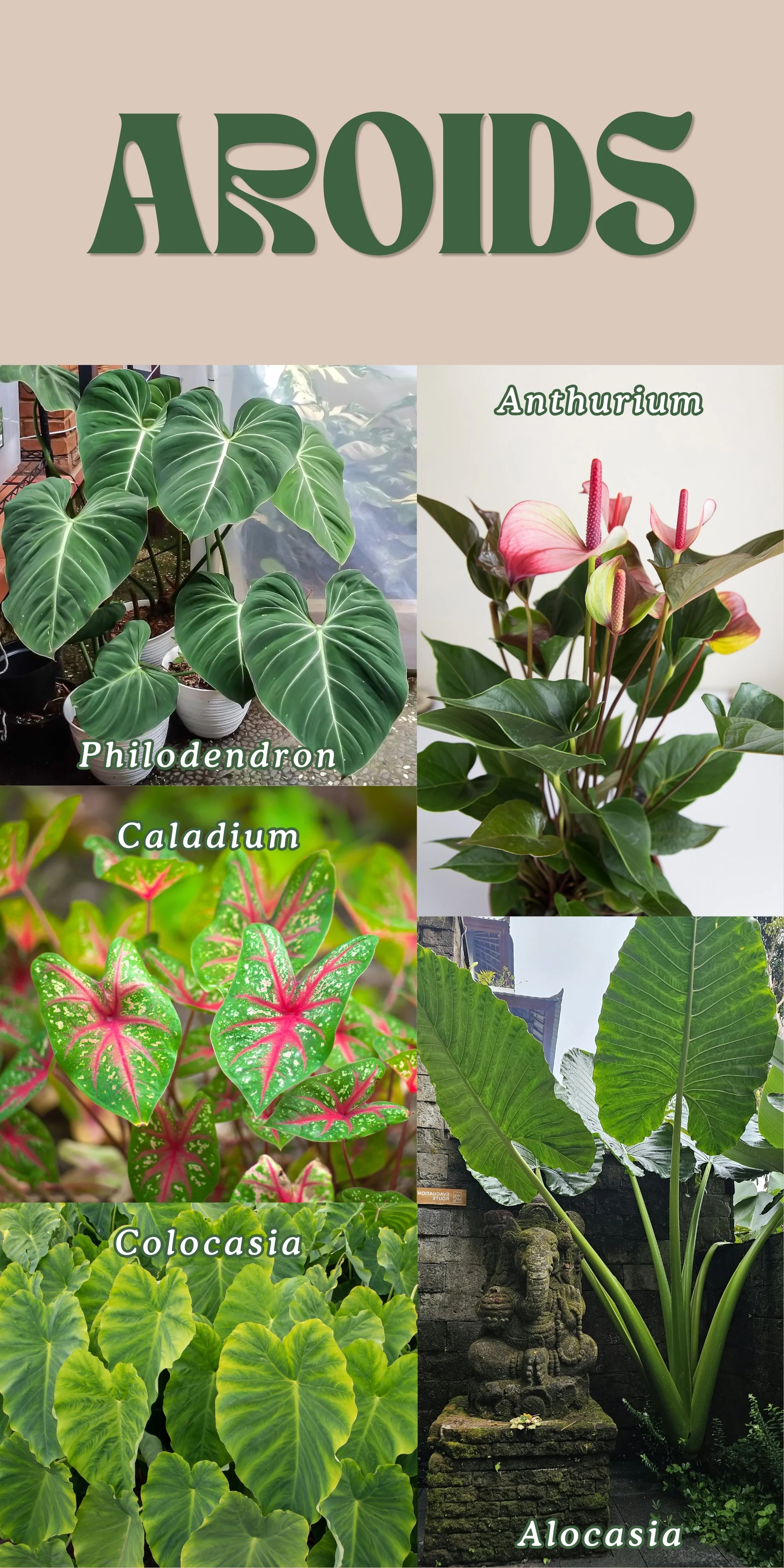
One of the most common species is the Philodendron. Philodendrons are identified by their large and imposing leaves that are often lobed or deeply cut. Philodendrons have juvenile and adult leaves, which can look drastically different from one stage to another. Juvenile leaves are typically heart-shaped when the plant is young, and as the plant matures, a different adult leaf takes shape. Philodendrons are very diverse, and they have a variety of growing methods. Their growth habits can be epiphytic (plants that grow on other plants), hemiepiphytic (Plants that spend part of their lives as epiphytes and part of their lives rooted in the ground), and, less commonly, terrestrial (plants that grow on land). Because of their growth habits, Philodendrons have both aerial and subterranean roots.
Anthurium
One of the instantly recognizable Aroid species is the Anthurium. Anthuriums are a plant species that can grow terrestrially or grow on other plants as epiphytes. Their inflorescence consists of a colorful, shiny, leathery spathe surrounding the spadix, where all of the flowers are found. The leaves are also leathery and vary in shape, and they are often clustered. Anthuriums are one of the main Aroids grown and propagated for cut flowers and floral displays.
Caladium
Caladiums are a species of plants with tuberous roots and colorful leaves. Their leaf shapes can be heart-shaped, arrow-shaped, or lance-shaped. They come in a variety of colors, including white, pink, green, burgundy, chartreuse, and rose. Some varieties have paper-thin leaves, making them appear translucent. They rarely produce flowers, and most growers remove any inconspicuous blooms to promote more foliage growth.
Alocasia
Alocasia consists of plants with tuberous roots. They are distinguished by their heart-shaped, upward-pointing leaves. Alocasias come in a variety of sizes, from small elephant ear-like leaves measuring from 12“ to 36” long. You’ve probably seen some of the large varieties of Elephant Ears here at the nursery or around the island! Alocasia leaves vary in terms of shape and color, and the leaves are glossy and have distinct veining. Many Alocasia species are thermogenic, meaning that the spadix produces heat when the flowers are open, releasing an aroma that attracts pollinators. Alocasia inflorescence is a white spadix with tiny flowers concealed by a hooded spathe.
Colocasia
Colocasia are herbaceous perennials that grow from a corm. They are known for their large foliage that comes in a variety of shapes, but are typically characterized by arrow or heart-shaped leaves. Leaves are typically thin and rubbery, and they have a matte look to them. Different species of Colocasia vary in foliage color, stalk color, and size. Colocasia contains irritants that can cause discomfort to the lips, mouth, and throat. This is due to raphides contained in the stalk that are like microscopic needles, released when a stalk is broken off. You might know this plant better as Taro or Kalo, where the corm is harvested to make poi!
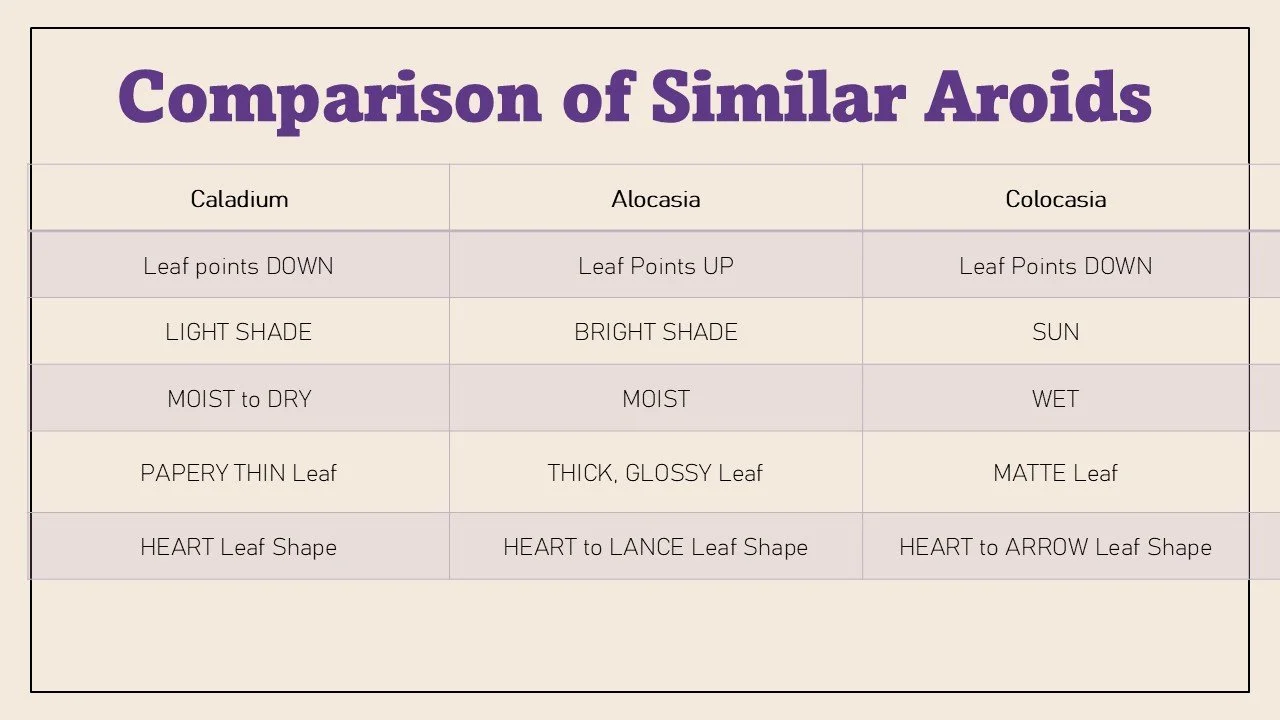
Thank you to Margie for this helpful Aroid identification table, and for all of the useful information on this topic!