
Keiki-Friendly Easter Egg Dye
The Easter festivities are fast approaching, and it’s a wonderful time of year for our keiki. With Easter egg hunts, chocolate bunnies, and meeting the Easter Bunny, it’s fun to find activities to get everyone involved in the fun! And what better activity to involve your keiki than making their own Easter egg dye! There are so many natural dyes that you can make from plants growing in your own garden, and it’s a great way to teach your little ones about plants and their many uses! Join us as we hop around the garden and collect plants for our Easter egg dye!
Blue Butterfly Pea
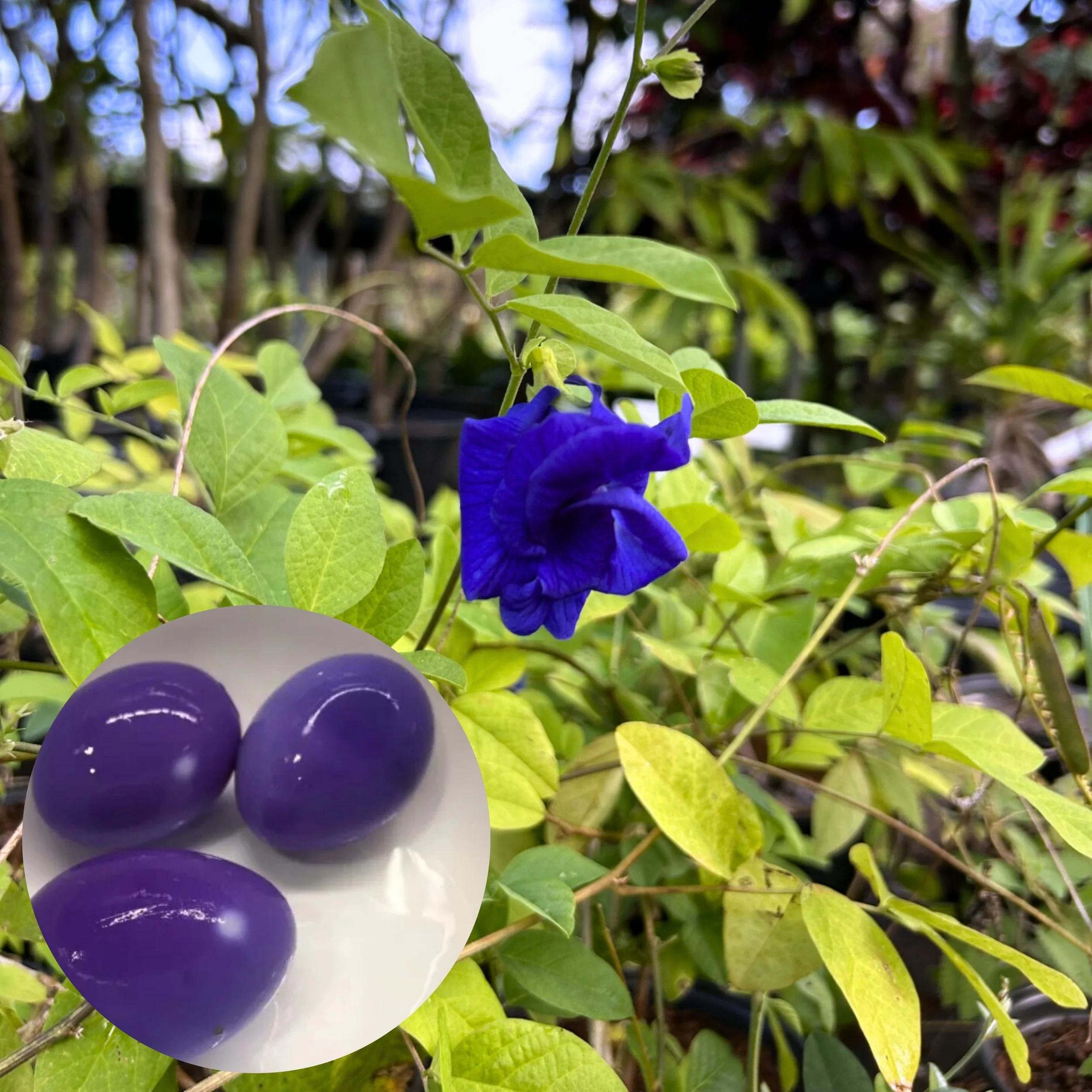
Blue Butterfly Pea is a great option for making natural dyes! Steeping the violet flower in water creates a dark blue tea, and the potent color makes it perfect to use as a natural egg dye! Here’s how to make it:
Harvest your fresh Blue Butterfly Pea flowers. 12-24 flowers is ideal, but whatever you can harvest will work.
Dry out the flowers for 24 hours and then add to a steeper. You can do it two ways: hot steep or cold steep.
Cold steep: Submerge the steeper in a pint jar full of cold water. Refrigerate overnight.
Hot steep: Take the dried flowers and add to a steeper. Steep in a saucepan or kettle with hot water for 3-5 minutes.
Add 2 cups of your steeped water to a bowl or tall container. The color should be a deep blue hue. Add 4 tablespoons of white vinegar and stir.
Add a couple of eggs to the container and ensure they are fully submerged. Soak for 2-3 hours until they reach the desired shade.
Turmeric
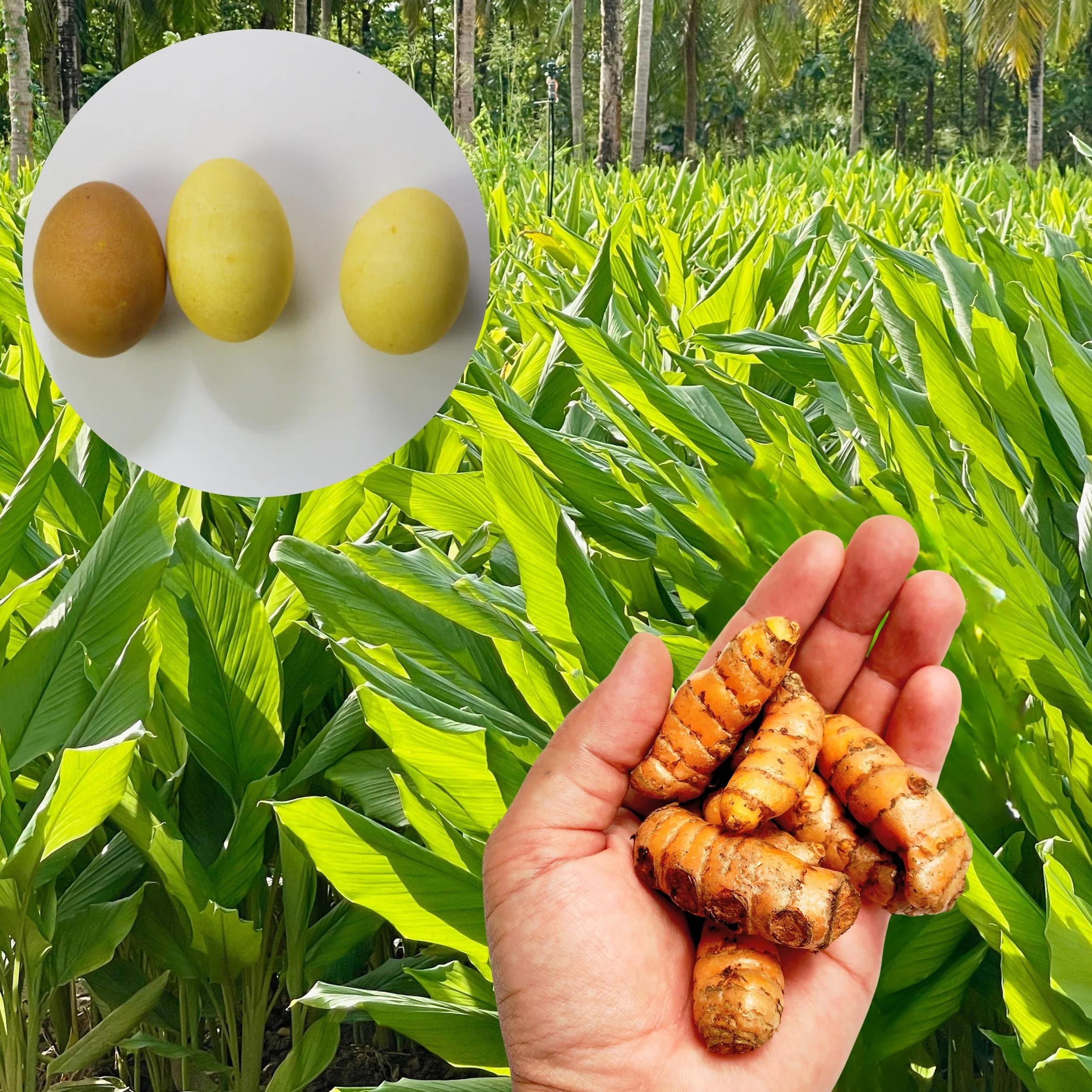
Fresh Turmeric makes a beautiful natural dye! Depending on how much you use and how long you boil it, you can create dyes from light yellow to warm orange. Here’s how to make a simple Turmeric dye:
Add 2 cups of water to a small saucepan and add a handful of Turmeric, peeled and chopped into large chunks.
Boil until the water turns a deep yellow color.
Allow the water to cool, then remove the large Turmeric chunks and strain the mixture into a container.
Add 4 teaspoons of white vinegar.
Add your eggs to the mixture, ensuring they are fully submerged.
Soak for 2-3 hours or until they reach the desired shade.
Sissoo Spinach
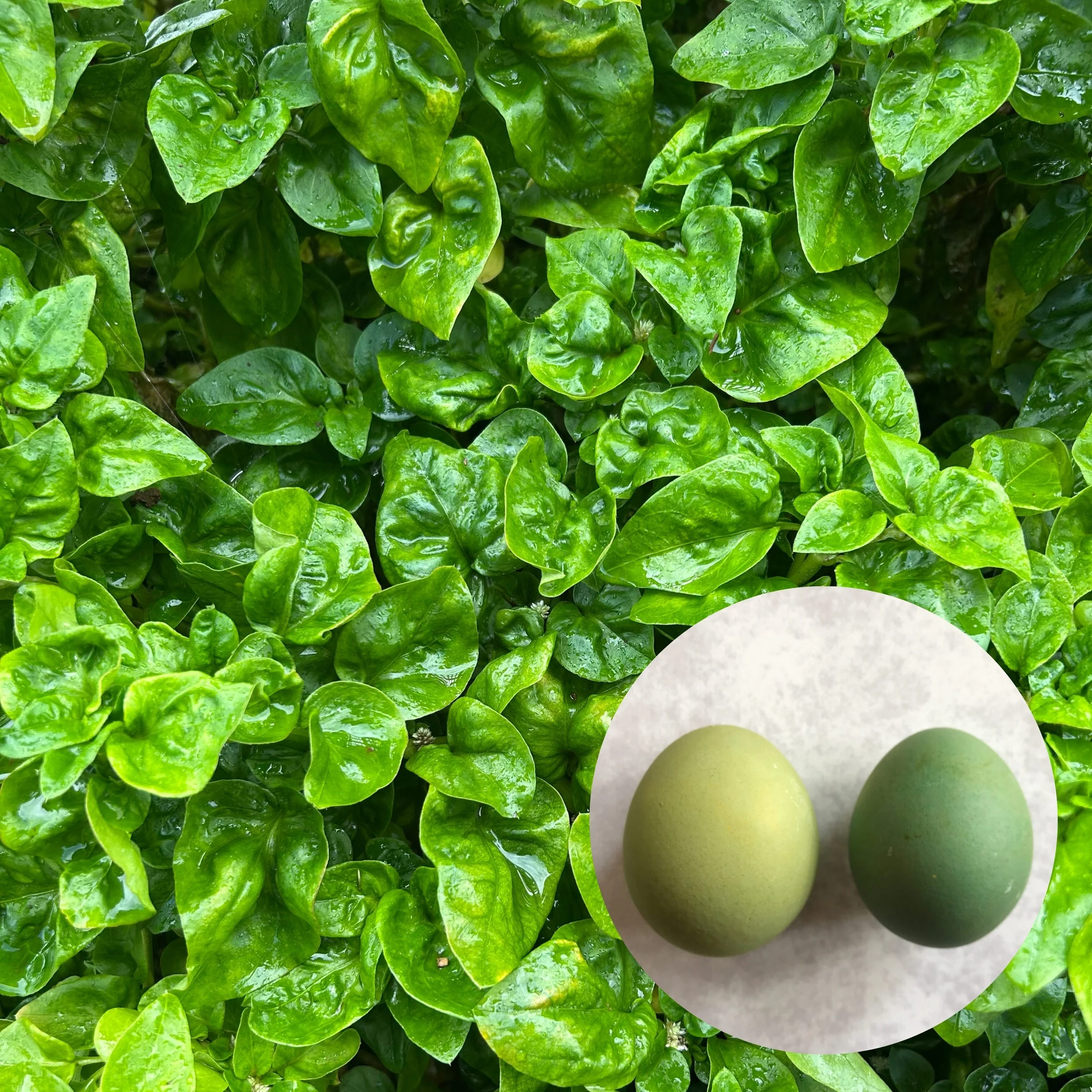
Spinach is an easy option for making a natural dye, and Sissoo spinach is plentiful around here! The dye has an earthy-green/brown hue to it, but adding extra iron can help intensify the green color! Here’s how to make it:
In a saucepan, boil 2 handfuls of Sissoo Spinach for 5-10 minutes.
Remove from heat and allow the water to cool.
Using a strainer, strain the mixture into a container, removing the spinach leaves from the dye.
Once cooled, add 2 tablespoons of white vinegar (Hint: Add a few drops of iron to the mix to help intensify the green hue!).
Add the eggs and allow to soak for 2-3 hours.
Once your eggs have reached your desired shade, remove from the mixture and rinse off with cold water.
Roselle Hibiscus
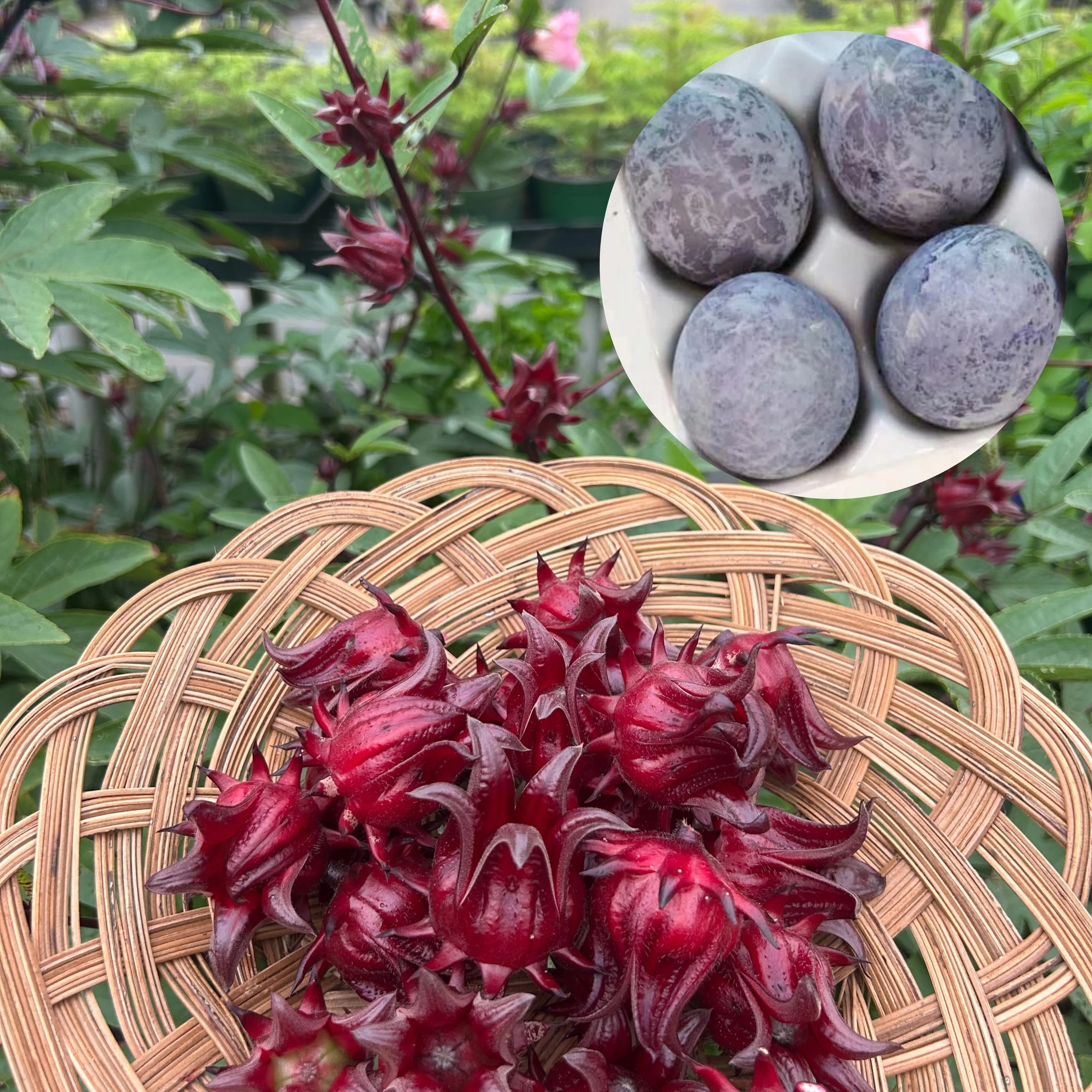
Roselle Hibiscus dye is a fun one! Although making Hibiscus tea results in a deep red color, dying eggs with Hibiscus tea results in a deep purple, almost black color. If you’re looking for a funky dye to add to your egg decorating, try it out! Here’s how to make it:
First, prepare the Roselle. Clip off the stem at the end of the calyx. Remove the inside seed pod and discard. Keep the outer flesh of the calyx and rinse.
Add four cups of water and one cup of reselle to a saucepan. Bring the water to a boil, then reduce heat.
Add 4 tablespoons of white vinegar to the tea and stir. Simmer for 30 to 40 minutes for the color to develop.
Remove the pot from the heat and carefully remove the roselle pieces with a spoon or tongs.
Add your eggs to the pot and ensure they are fully submerged in water. Add more water if needed.
Return the pot to medium heat and bring the mixture to a boil. Then reduce heat and allow to simmer for 10-15 minutes.
Allow mixture to cool and then use a spoon to remove the eggs. Rinse under cold water and pat dry with a paper towel.