
Extraterrestrial Plants
These oddities might have you believing in the extraterrestrial… Check out our plants that are out of this world!
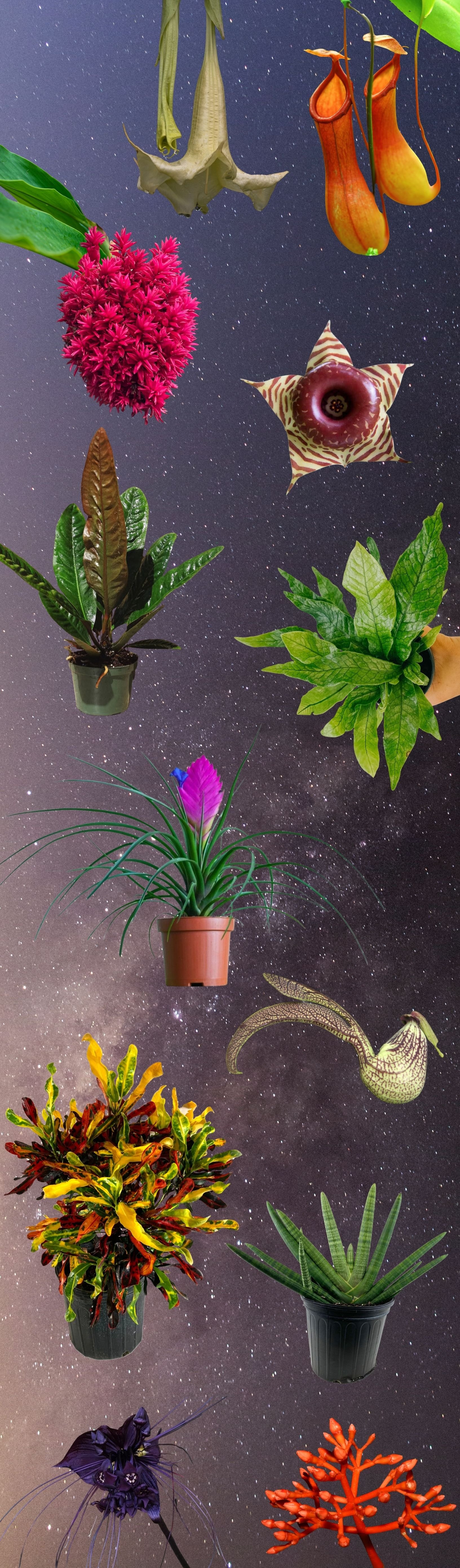
Angel Trumpet
Brugmansia, commonly known as Angel's Trumpet, is a small tree with whimsical flowers that hang down in a trumpet shape. Flowers can be pink, white, or peach colored, but be cautious: Angel Trumpet is extremely toxic. The entire plant contains alkaloids, which can affect the nervous system. Use caution around Angel Trumpet in your yard, and plant it away from areas regularly used by children and pets. Wear gloves, long sleeves, and eye protection anytime you’re pruning Angel Trumpet to prevent exposure to its toxic sap.
Tropical Pitcher Plant
Tropical Pitcher Plants (Nepenthes) are carnivorous plants that produce large pitchers that hang down from vines. These pitcher plants trap their prey by luring insects to their leaves with their nectar. Insects enter the pitcher looking for the nectar and then fall back into the trap when trying to escape. These pitfall traps contain digestive juices that break down the prey and absorb their nutrients.
Double Red Tahitian Ginger
A cultivar of Alpinia purpurata, the Double Red Tahitian Ginger looks similar to the common red ginger when it first begins to flower, but the inflorescence continues to branch with layers of bracts and flowers. These blooms can be massive, ranging from 6-12” long. The plant itself grows 4-10 feet tall and can grow in full sun to part shade.
Lifesaver Cactus
Huernia zebrina, called the Lifesaver Cactus for its star-shaped flower with a glossy center ring resembling a lifesaver candy, grows on spineless, spreading stems. The stems can grow 3-6” tall in bright, indirect light. This alien-like flower attracts flies as its pollinator!
Anthurium Superbum
Anthurium superbum, a type of Bird’s Nest Anthurium, is a prehistoric-looking epiphyte. Different from the heart-shaped anthuriums, Superbum grows in a tight, upright rosette shape with thick, leathery, stiff leaves. The leaves feature an olive-green topside and dark burgundy underside. The puckered texture of the leaves gives it its unique prehistoric look
Crocodile Fern
Crocodile Fern (Microsorum musifolium) is a broad-leafed fern with strap-like fronds with deep veining patterns that resemble crocodile skin! These leathery, glossy leaves make a statement in any landscape!
Pink Quill Plant
Tillandsia cysnea, a type of airplant, is best known for its feathered quill-looking flower! The spiky foliage closely resembles its other Bromeliad relatives, but the real star of the show is the dark violet flowers that emerge from the large purple bract.
Dutchman’s Handpipe
Aristolochia Ringens, commonly called Dutchman’s Handpipe, is a climbing vine known for its pipe-shaped flowers with mottled patterns, adding to its alien look. This vigorous vine can reach up to 20 feet! The “pipe” acts as a trap for its main pollinators: flies. The flower emits a faint scent of decaying organic matter to lure flies into the tube. Flies are then dusted with pollen before being released!
Mamey Croton
Codiaeum variegatum ‘Mamey’ is a tropical shrub that can be grown outdoors or inside as a houseplant! Its bright, multicolored leaves twist and curl into a corkscrew shape as they grow.
Starfish Sansevieria
Starfish Sansevieria (Sansevieria cylindrica ‘Boncel’) is a snake plant or succulent with round, fat leaves that fan out into the shape of a star, resembling a starfish popping out of the soil!
Black Bat Flower
Black Bat Flower (Tacca chantrieri) is a shade-loving plant with eerie-looking dark-colored blooms that resemble a bat’s face and wings. The bracteoles look like long whiskers and can be 8-10 inches in length. The flower itself can get up to 12 inches in size! The bat flower can bloom up to 8 times in one season.
Coral Medinilla
Medinilla scortechinii, or Coral Medinilla, is a rare and unusual broadleaf tropical shrub. The plant produces orange flowers that branch out in a coral-like shape. This shrub typically grows to 2-3 feet, but can get larger in ideal conditions. The “flowers” are technically panicles with small flower clusters that attract bees, butterflies, and sometimes birds.